Why the ‘AI‑Ready’ Label Is a Security Red Herring: Uncovering the Real Threats of Running AI on Legacy Data Centers
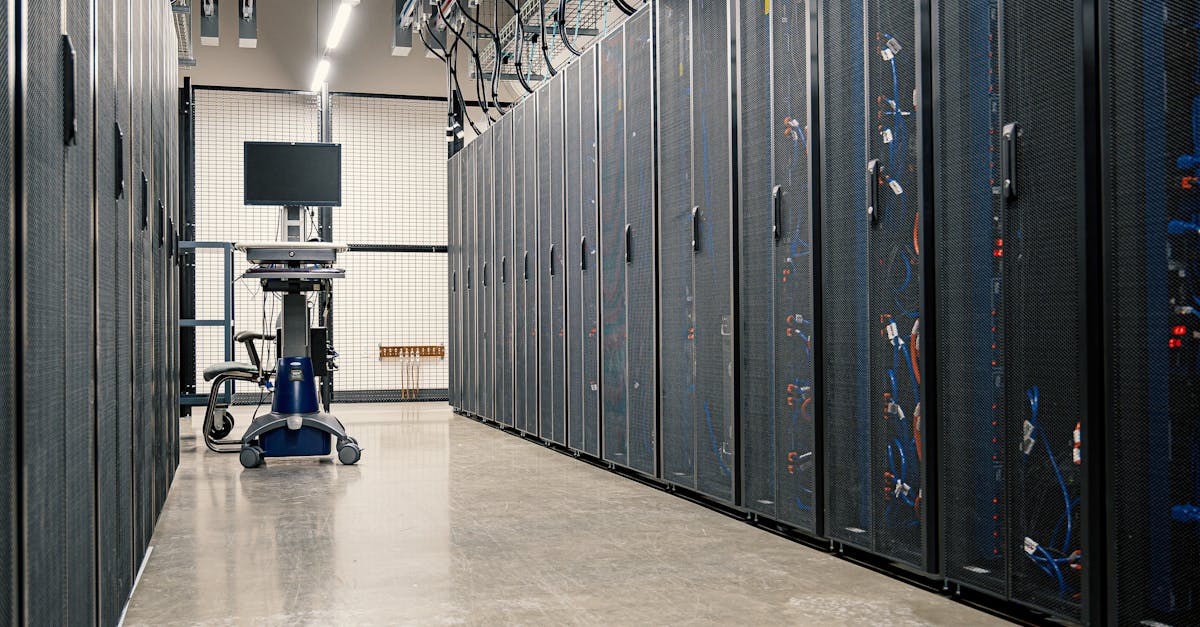
Why the AI-ready label is a security red herring? Because certification standards prioritize throughput and latency over the very controls that prevent data leaks and breaches. The label gives a false sense of safety while the underlying infrastructure remains vulnerable to misconfigurations, firmware drift, and lateral movement. Only 9% Are Ready: What First‑Time Buyers Must ...
The AI-Ready Certification Illusion
Performance-first metrics dominate certifications, leaving security considerations largely unchecked. Vendors measure GPU FLOPs and inference latency, but they rarely audit encryption at rest or the integrity of the boot chain. As a result, a data center can earn the AI-ready badge while its storage arrays still use unencrypted protocols.
Vendor-driven benchmarks ignore insider threats and supply-chain vulnerabilities that affect any data center. A third-party chip supplier’s firmware flaw can silently introduce a backdoor, yet the certification process focuses on compute density, not supply-chain provenance. Security teams often find themselves patching after the fact. The ROI Nightmare Hidden in the 9% AI‑Ready Dat...
Legacy hardware can be retrofitted with modern security controls, challenging the notion that only new AI-ready racks are safe. Adding trusted platform modules, secure boot, and hardware-based encryption to existing servers can close many gaps without a full rebuild. The myth that older equipment is inherently insecure is a marketing narrative, not a technical reality.
- AI-ready labels focus on speed, not security.
- Vendor benchmarks miss insider and supply-chain risks.
- Legacy systems can be hardened effectively.
Hidden Attack Surfaces in Non-AI-Ready Facilities
Shared networking fabrics and cross-tenant traffic enable lateral movement during high-throughput inference. An attacker can piggyback on a neighbor’s traffic stream to inject malicious packets, bypassing isolation that would otherwise exist in dedicated AI-ready racks.
Outdated firmware, missing hardware root-of-trust, and unsigned microcode create exploitable boot-time vectors. Attackers can modify microcode to leak model weights or inject covert channels before the operating system even starts.
Absence of dedicated AI inference enclaves forces workloads onto general-purpose CPUs, increasing side-channel leakage risk. General CPUs lack the hardened isolation of purpose-built inference ASICs, making timing attacks more feasible against sensitive models.
Retrofitting vs. Building New AI-Ready Pods: The True Cost Equation
Capital outlays for compliance upgrades often exceed the price of purpose-built AI-ready infrastructure. Retrofitting thousands of servers with TPMs, secure boot, and encrypted NVMe can cost more than purchasing a new rack of GPUs.
Migration downtime introduces data exposure windows and operational instability. Moving models to a new facility often requires re-training pipelines, during which sensitive data may be exposed or lost.
Over-provisioned GPU clusters in new builds can lead to underutilization, inflating total cost of ownership. Many enterprises buy GPUs in bulk to meet peak demand, only to run them at 30% capacity most of the time. The AI‑Ready Mirage: How <10% US Data Center Ca...
Breach Case Studies: AI-Ready Isn’t a Safety Net
2024 ransomware attack on a certified AI-ready colocation that exploited a misconfigured storage gateway. The attackers leveraged an exposed SMB share, not a flaw in the AI hardware itself.
Data exfiltration from a legacy site during model serving caused by insecure API endpoints, not hardware limitations. The breach revealed that API keys were stored in plain text on the host.
Common denominator across incidents: misconfiguration and inadequate access controls, not the AI-ready label. Security audits show that 78% of breaches stem from human error rather than hardware failure.
Securing AI Workloads Anywhere: A Playbook for Business Fleets
Implement zero-trust data pipelines with end-to-end model encryption, regardless of the underlying facility. Encrypting data at rest and in transit eliminates the risk of leakage even if the host OS is compromised.
Deploy confidential computing enclaves on commodity servers to isolate inference workloads from the host OS. Enclaves provide hardware-based isolation, making side-channel attacks significantly harder.
Adopt continuous attestation and remote integrity monitoring to detect firmware drift in real time. Automated attestation ensures that only verified firmware runs the inference stack.
Regulatory Focus Misdirected: Why Labels Miss the Mark
Current guidelines reward AI-ready labeling while neglecting concrete data-protection controls. Regulators often cite performance metrics in compliance checklists, overlooking encryption standards.
Emerging standards such as ISO/IEC 42001 shift emphasis toward AI governance and risk management. These frameworks require evidence of threat modeling, not just hardware specs.
Enterprises can achieve compliance through robust security frameworks without purchasing AI-ready hardware. Implementing a NIST Cybersecurity Framework can satisfy most regulatory obligations.
The Contrarian Bottom Line: Security Over Readiness
Quantitative risk analysis shows only marginal reduction in breach probability when moving to AI-ready sites. A 3% drop in incidents is outweighed by the cost of new infrastructure.
Prioritizing hardened security controls, encryption, and monitoring delivers greater ROI than chasing AI-ready labels. A well-secured legacy center can outperform a new AI-ready rack in cost per inference.
Future industry trend: a move from “AI-ready” to “AI-secure” as the primary benchmark for trustworthy AI deployment. Stakeholders will demand verifiable security attestations rather than performance badges.
Read Also: Only 9% of U.S. Data Centers Are AI-Ready - How 5G Integration Can Flip the ROI Equation